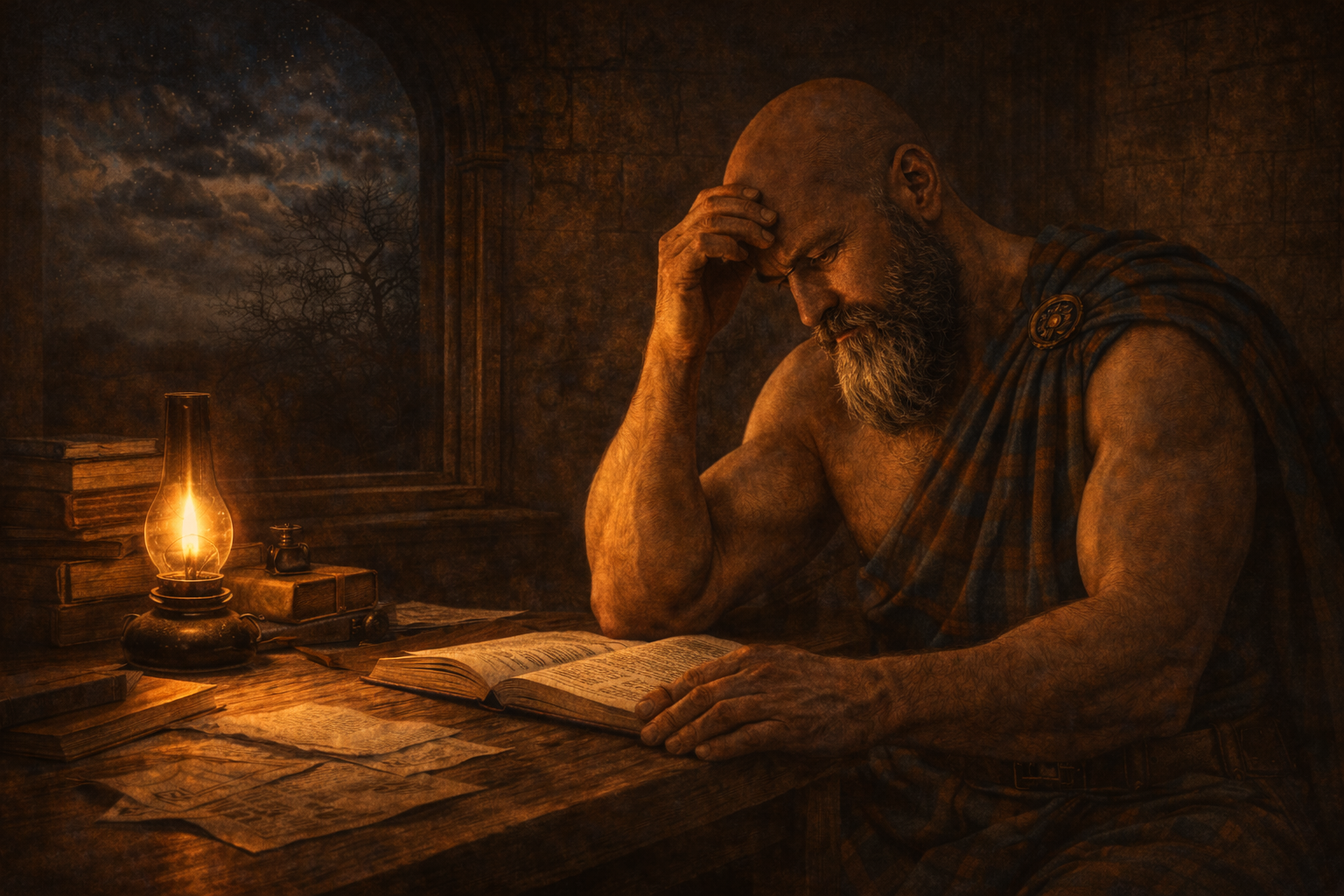
I didn’t go looking for despair. It found me quietly, the way serious thoughts usually do.
It started with an article about Sweden — once held up as proof that a humane, egalitarian society could endure. The piece wasn’t sensational or hostile. It was reflective. Elderly citizens, beneficiaries of a more equal system, looking back and admitting something uncomfortable: they let their guard down. They assumed the work was finished. They were wrong.
That admission cracked something open.
Because once you accept that even a society designed around equality can drift toward inequality — not by force, but by comfort — the pattern becomes hard to unsee. Sweden isn’t collapsing. It’s sliding. And sliding is more dangerous, because it feels like stability right up until it isn’t.
From there, my thoughts widened.
The United States didn’t lose its democratic ideals in a single coup. It eroded them over decades. The New Deal era proved that power could be constrained, wealth could be regulated, and dignity could be expanded. And then, slowly, those constraints were reframed as inefficiencies. Regulations became burdens. Vigilance became paranoia. Complacency did the rest.
History is littered with similar stories. The Etruscans. The Celtic tribes. Small, decentralized, comparatively egalitarian cultures that didn’t fall because they were ignorant, but because they were outmatched by systems optimized for domination. Rome didn’t just conquer land; it industrialized hierarchy.
The unsettling realization is this: societies that restrain power create conditions where power can regroup.
For a long time, I believed education was the antidote. That deeply informed, philosophically literate citizens could act as stewards — aware of history, conscious of complacency, committed to vigilance. That knowledge would inoculate us against repetition.
I’m finding that hard to believe anymore.
Not because education is useless, but because understanding does not reliably override incentive. Even philosopher-citizens get tired. Even the well-informed rationalize exceptions. Even those who know the pattern convince themselves that this time is different.
At some point, this line of thinking collided with a darker implication.
If the cycle continues — rise, restraint, drift, capture — then eventually technology tips the balance. Surveillance becomes ambient. Enforcement becomes automated. Weapons become asymmetric. Power concentrates in ways that cannot be meaningfully challenged.
Not a dramatic apocalypse. A lock-in.
And once power is locked in — once capture is complete — correction may no longer be possible. Collapse wouldn’t be cyclical anymore. It would be terminal.
This is where the Fermi Paradox stopped feeling abstract.
Maybe the silence of the universe isn’t because intelligent life is rare. Maybe it’s because intelligence doesn’t reliably lead to wisdom, and wisdom doesn’t scale faster than power. Maybe most civilizations don’t explode — they ossify, overreach, or quietly destroy the conditions that made them possible.
If that’s true, then enlightenment isn’t an evolutionary destination. It’s a fragile, counter-selective act — chosen against pressure, not rewarded by nature.
That thought didn’t leave me angry.
It left me grieving.
Grieving the idea that we were progressing toward something permanent. Grieving the hope that the right system, the right education, the right design could finally break the cycle. Grieving the belief that humanity would be the exception.
I don’t know where this leaves us.
I know only that pretending optimism is cheap, and forced hope feels dishonest. Some realizations don’t demand solutions. They demand witness.
This is mine.

Leave a Reply